Josh Spector

Why You Shouldn’t Do What Jay Mohr Just Did

A couple days ago I came across this blog post on comedian Jay Mohr’s website in which he declared that he was leaving Twitter because he was getting too much negative harassment from haters. You should read his whole explanation, but here’s an excerpt:

Twitter sucks. It starts as a really amazing social network but slowly and surely becomes an amazingly awful social network. When I signed up for Twitter I was super excited. I wanted to type super funny things. I wanted to hear feedback from fans…okay, screw that…I wanted more followers than other comics. If you are a comic, that is truly the perverse joy of twitter. I could tweet the noblest or funniest 124 character bon mots in the world but they wouldn’t rent space in my brain at night as much as, “How do the Sklar Brothers have over a hundred thousand followers?” (I think they are hysterical by the way)

He went on to say…

I don’t think it is a particularly good idea to have a social media sight where ANYONE can tell me I suck. Many of the trolls tell me that I should have thicker skin. No. No I shouldn’t. When I am coming home from the beach and smiling and happy, I should be able to check my twitter account without reading that a movie of mine is on Showtime4 and it sucks a bag of donkey balls. There is no reason anyone should have that type of accessibility to anyone else.

When I read that, here’s a few of the words that come to my mind: Foolish, short-sighted, petty, wrong, and stupid. I know that seems harsh, but sorry, that’s how it comes across to me.

Mohr’s decision to abandon Twitter is bad enough, but his reasons for it and his decision to spell out those reasons in this blog post are even worse. Here’s why:

It sounds like the main reason that Jay is bailing on Twitter is because he didn’t like a lot of the feedback he gets from it. I’m sure it gets annoying hearing people tell you that you suck, but isn’t that what heckling is? If he were performing at a show and people didn’t laugh, or they heckled him, I assume he’d handle it and move on. I don’t think he’d “quit,” walk off stage, and never come back.

Like it or not, the world has changed and audiences can now react to your creations through social media – whether you’re actually on social media or not. Just because Jay abandons Twitter, it doesn’t mean that people who hate his movies are going to stop posting Tweets saying that they hate his movies. All that he does by leaving is ensure that that his voice is less heard.

For example, now the only things that will be said about Jay Mohr on Twitter are by other people – he no longer has his own voice to allow people to make their own opinions about him.

Making it even worse is the fact that by abandoning Twitter, he’s taken away one of the easiest ways for the people who love him to reach out to him and interact with him. Essentially, he’s punished his fanbase in a screwed-up attempt to punish the people who hate him. The people that hate him won’t suffer by him leaving Twitter, the people who love him will. It’s a completely backwards decision.

In fact, if you look at the couple comments left on his blog post from his fans, they almost unanimously are disappointed that he’s leaving Twitter. For example, one fan says “…your fans will miss the interaction…,” and another says, “I’m a big fan who signed up on twitter just to find out when you host the Jim Rome show…”

Finally, what kind of message does it send to your fanbase when you announce that you’re leaving Twitter because a few people were saying bad stuff about you? Here’s what it says: that you’re extremely thin-skinned, that there must be a lot of people out there that don’t like you, that you care more about those people than your fans, and (hypothetically) that maybe your fans should reconsider why they like you when so many other people don’t? It’s just all bad across the board.

Now, I don’t intend this post to bash Jay Mohr – I don’t know him personally and have no grudge against him. Actually, I feel bad for him because there was nobody around him to explain to him why this was such a bad idea. I don’t believe that anybody has to be on Twitter if they don’t want to be, and it’s not going to make or break your career. However, I can guarantee you that going on Twitter and then bailing in a public fashion and crediting your departure to your haters is definitely not a good idea.

Do you agree? I’d love to hear your thoughts in the comments…
5 Things You Need To Know About Hollywood Development Deals

Over on the Connected Comedy Facebook page the other day I asked what topics you wanted me to address on this site and several of you suggested that you’d like to learn more about how people get development deals in Hollywood. So, I’ve put together a quick rundown of 5 Things You Need To Know About Hollywood Development Deals…

1. Why It’s So Hard To Get A Development Executive To Say Yes

Several years ago, I remember meeting with a successful Hollywood movie producer who told me the following about pitching her projects to studio development executives: “You know why it’s impossible to get somebody to say yes to your project? Because every time they do, they’re risking their job. Nobody ever got fired for saying no to something.

That comment has always stuck with me because I’ve found it to be absolutely true. The biggest reason it’s so difficult to get a development deal no matter how awesome your idea may be is because that person that you need to say yes may be more interested in keeping their job than trying to actually develop something cool. Because producing movies and TV shows is so expensive, a development executive is really risking losing their job if your project doesn’t work. On the flipside, if they say no and somebody else makes it and it’s a big success, they’re rarely punished for passing. Right or wrong, it’s just the way Hollywood works.

This doesn’t mean development execs won’t ever say yes, but it should help you partially understand why it’s so hard to get them to take a chance on you. After all, would you risk your career on your idea? If the answer’s not yes, you probably shouldn’t be pitching it in the first place.

2. Studios Are Run By Their Marketing Departments

In the past decade or so, there’s been a major shift in the movie business. It used to be that movies would open in a few movie theaters, then if it did well it would gradually spread across the country. But now, movies open on 3,000+ screens and the majority of a movie’s revenue is generated from that opening weekend. As a result, studios realized that the quality of the movie wasn’t as important as its marketability – because you needed the majority of people to go see it before anybody else had seen it.

This phenomenon also resulted in the growing influence that studio marketing departments had in deciding what projects actually got developed and made. In fact, most studios are now run by people who came out of the marketing department instead of the production department. This is why just about every movie you see come out these days is a remake, or based on a comic book, or a sequel, or “high concept” – because those movies are easier to sell to an audience that has to go buy a ticket the weekend the film opens.

What this means for you is that the marketability of your concept is just as important as the concept itself. It’s extremely difficult to get a development deal for original material, but it’s virtually impossible to get a deal for original material that doesn’t have a high concept “hook.” Something the studio knows it can easily sell with a one-liner or movie poster. By the way, this is also why the overall quality of movies lately has gotten so bad, but that’s for another post.

3. Your Execution Is More Important Than Your Ideas

I know you probably think your movie or TV idea is brilliant and it probably is. The problem is, your ideas aren’t worth what you think they are. There’s a million amazing ideas floating around Hollywood, but what people in the business have realized is the ability to execute an idea is more important than the idea itself.

For example, you might have the greatest idea for a movie ever, and you can kill in a room when you pitch it, and the development execs that you meet with love it. But…they have no way of knowing if you can execute on the idea unless you’ve actually written a script for them to see. Back in the day, studios bought pitches all the time, but that rarely happens these days because it’s too risky.

The more you can show your ability to execute your idea, the better your chance of getting a deal. For example, a finished screenplay is way better than just a pitch. A finished screenplay with a demo reel showing actual footage you shot is better than just a finished screenplay. And an actual web series version of your idea with a loyal audience, is better than a demo reel. The more you demonstrate you can execute, the less risk there is for development execs if they say yes.

4. Development Executives Hate Doing Development

This one might surprise you, but it’s absolutely true. A development executive’s job is theoretically to find talent and projects and “develop” them by finding writers, directors, actors, producers, etc. and putting them together to bring the project to life. But the reality is that the more meaningful pieces of that puzzle you can bring to the table, the more likely you are to get a deal.

For example, let’s say you’ve got an idea for a TV series that you hope to star in. Instead of just going and pitching the idea to a development executive, maybe you can track down a veteran TV producer and get them attached to run the show. Or a well-known actor to agree to star in the project. Or a writer with great credits who agrees to shape your concept into a screenplay. Attaching these elements to your project before you go pitch it will make it more likely that you’ll succeed. Why? Because you’re actually doing some of the development executive’s job for them and making their life easier.

5. Development Executives Are Looking Everywhere For New Projects

It used to be that there was a relatively streamlined path to a development deal – hone your standup act in comedy clubs, go on the road, book a comedy festival appearance, book a late night TV appearance, and turn your standup “persona” into a TV sitcom when a development executive gives you a development deal after that. That model has pretty much gone out the window at this point.

While it can be trickier to navigate your way to a development deal these days and there are not nearly as many to be had, the good news is that people are now getting deals from all kinds of different sources. Twitter accounts, blogs, and YouTube channels are among some of the many ways that people are now getting discovered by development executives and being given deals.  The execs are out there looking everywhere, it’s just up to you to put something out there for them to see.

Connected Countdown: 10 Things You Need To See This Week

Every Friday I break down the 10 things I think you most need to see this week, including a mix of posts on this site and other stuff from around the web that I think should be on your radar. Here’s this week’s countdown…

10. A 54-Minute Discussion About How Comedians Should Approach Their Career

This Connected Comedy post features an audio clip of an interview I did with comedian Jordan Cooper in which we talk about a wide range of challenges and opportunities that comedians face.

9. Netflix Announces Its First Original Programming

Deadline.com breaks the story that Netflix is getting into the original content business, which could potentially result in a huge shift in the way the entertainment industry operates.

8. 5 Free Tips For Booking Your Own Comedy Tour

In this Connected Comedy post, I offer some advice to a comedian who’s gearing up to try to book his first national tour on his own.

7. A Look At How Direct-To-Fan Marketing Can Work

This Hypebot article features a behind-the-scenes look at a direct-to-fan marketing campaign that’s being used to break a new music act, but it’s very relevant to the way I believe comedians should be approaching their careers as well.

6. How A Reader Worked A Connected Comedy Tip Into His Act And Got Great Results

Comedian Ray Harrington implemented one of the things I recommended in this post, and shares the story of its success.

5. The Winners Of New York’s Excellence In Comedy Awards

The Comic’s Comic breaks down this year’s winners.

4. Ben Franklin’s Daily Schedule

Over on the Connected Comedy Tumblr page, I shared this photo of Ben Franklin’s daily calendar – it might give you a little inspiration.

3. How To Get 100 New Fans To Your Website Every Day

The Promote Your Music blog has an interesting post full of suggestions for how you can get some free traffic to your website.

2. The Biggest Misconception About How To Use Twitter

In this Connected Comedy post, I explain how you can get more out of your time spent on Twitter if you use it in the right way.

1. How To Add Clickable Links To YouTube Videos

This video has a demonstration of a cool trick you can use to add clickable links to any YouTube video that you embed anywhere outside of YouTube itself.

Looking for more? Check out my previous Connected Countdown posts.

How A Comedian Worked A Connected Comedy Tip Into His Act And Got Great Results

Now that I’ve been posting advice on this site for several months and have built up a nice readership, it’s been really exciting for me to hear from readers who have implemented some of the things I write about in their own career and are seeing good things happen as a result.

Yesterday, I got an email from comedian Ray Harrington, who was inspired by Connected Comedy to attempt to do something creative to get audiences to remember his name and connect with him after his shows. Even though he hadn’t read my specific post on 4 Ways To Get Comedy Club Audiences To Remember Your Name, he wound up doing something exactly like I suggested in the post.

Here’s the email Ray sent me to tell me about what he’s done:

Hi Josh,

I’ve enjoyed your blog and facebook page for a while now and thought you would like this. I’m a comedian who’s starting to get to the ‘Full Time’ level and wanted to apply my marketing degree to my own career.

So many comedians will plug their website or tell people to friend them on Facebook. But when they do it on stage, people either forget or just tune out the information, like a commercial in the middle of a great show. I wanted to get people to remember my website and WANT to go to it right after the show. So I incorporated the website itself right into a bit! Now, when I close a show, I do a bit about ghost stories and haunting the internet. You can see a clip of the bit from last week here:

As you can see, the interest is built up and the call to action is part of the joke. I love seeing people pull out their phones when I ‘challenge’ them to. Here’s the website they see.

I’ve only done the bit with the website call to action once and already, the video received 200 hits from that one show. Being able to track the impact is great and I’m happy that I’m able to apply just a bit of my degree creatively… after all, I paid enough for it. lol.

Ray

I love what Ray’s doing here and think it creates a lot of opportunities for him to expand it even further. I suggested he consider adding something to the site that allows people to email Ray’s Ghost a question and then he’d be able to reply to them as his ghost (and more importantly, it would be a way to capture email addresses of people he knows had seen his show live and liked it enough to follow up after the show.)

The other thing I love about this is that it’s a perfect example of somebody exploring the idea that performing standup comedy no longer has to be just about a guy standing on stage and telling jokes into a mic. There’s now limitless opportunities to extend jokes beyond the stage, and beyond that one live moment. I encourage you to consider the possibilities and be creative about what it means to be a comedian.

Again, I thought it was really interesting to see an example of how somebody is implementing one of the things I talk about on this site and wanted to share it with you. If you’ve implemented any of my tips into your career and seen good results, please email me to tell me about it.

A 54-Minute Discussion About How Comedians Should Approach Their Career

Jordan Cooper, a Louisville-based comedian and the mastermind behind the Not A Pro Blog, recently asked if he could interview me for his website and I was happy to do so. Our interview wound up turning into a lengthy conversation that covered a ton of topics that I think will really interest my readers so I wanted to share it with you on this site.

You can click here to download the full length audio recording of the interview, or if it’s easier for you, I’ve uploaded the entire interview on to my new YouTube channel (please go subscribe to it!) and you can “watch” the interview spread out across the six YouTube videos posted below.

I’m really pleased with how the interview turned out and would love to hear any thoughts you have about what we discussed. Please leave them in the comments.

5 Tips For Booking Your Own Comedy Tour

In 5 Free Tips, I provide some free advice specifically tailored to one person’s content. If you’d like me to give you 5 Free Tips, please send me an email and tell me a little about yourself.

Today’s free tips are comedian and writer Zack Stovall, who sent me the following email:

Josh,
I’m considering trying to put together a series of shows across the country. What’s the best way to go about booking venues? Never done it before, and am wondering how to go about it. I’m looking at small, 80-125 people venues, traditional for now, and looking into less conventional places while I’m there.
So do I just call them up and ask for the door? Flat fee? Whatever works for them? How far in advance should it be? I’m hoping to do some things in April, and a bigger thing in June. Just wondering if you had any pro tips.
Thanks,

Zack

Here’s my suggestions for booking your own tour…

TIP #1: Figure Out What You Have To Offer

The most important thing to do before you reach out to any venues is to figure out exactly what you have to offer and to anticipate how you’re going to answer the questions that the venue owner will likely have. They’re not just going to trust you because you tell them that you can get a lot of people to show up for your show, they’re going to want to know how you can be so sure – what’s your marketing plan, what connection you have to an existing audience in that area, what will happen if nobody shows up, etc.

The venue owner is also likely going to want to know what’s in it for him – will you guarantee a certain amount of money is spent at his establishment? Will you guarantee a certain number of tickets sold? The stronger the offer is that you bring to the table, the easier it will be to get a venue to book you. Remember, all venues are in business to make money and that’s how you need to appeal to them.

TIP #2: Choose The Right Size Venue

I have no idea what kind of connections or fanbase you have in the cities you’re planning to go, but setting your sights on 80-125 seat venues may be a pretty lofty ambition. Unless you’re sure that you can easily draw 80 people, I wouldn’t book yourself into an 80-person venue.

In general, you’ll be much better served by putting on a “sold out” show in a smaller venue than you will having 50 people show up in a 100-person venue. This will be better for you because it will make the show better, it will make the venue happier, and it will convey to the people that attend your show that it was a “hot ticket” as opposed to that they’re in the minority of people who care about you.

This doesn’t mean that you can’t do bigger venues, but I’d recommend you be honest with yourself about how many people you think you can count on drawing, and book venues that are a little below that number as opposed to a little above it.

TIP #3: Every Deal Will Be Different

Because every venue is different and has its own unique set of goals and needs, just about every deal you do with a venue will likely be different. Some venues know that they have a regular audience that shows up and they don’t need you to bring in a crowd, so they’ll pay you less than another venue that needs you to get people to show up. Some places make the majority of their money on the booze and food and will let you keep all (or most) of the ticket fees, but none of the food and beverage money, while other places will give you a cut of that money.

There’s no one-size-fits-all for doing deals with bookers, but the best strategy is to understand how the venue makes its money and what their needs are, and then negotiate a deal that will help them do that while at the same time allowing you to profit as well.

TIP #4: Team Up With A Local

Again, I don’t know how extensive your promotion machine is or isn’t, but one thing you might want to consider is teaming up with a local comedian, producer, or promoter in each city to help put together the show. While you’ll likely have to share in the success of the show, it can make the whole thing much easier for you.

A local person who is already connected to that community can likely help you get a venue (and a better deal at that venue), can help you attract an audience because they likely already have their own established following in that area, and can give you some instant credibility in a town where you may be an unknown commodity. Plus, in addition to sharing profits, you may be able to introduce the local person to your own fanbase (or return the favor when they come to your city) so there’s benefits for them as well.

TIP #5: What’s Your Main Goal: Money or Exposure?

Of course if you’re going to book your own national tour you’re hoping to get a little of both, but I do think it’s important in your own mind to define for yourself which is more important before you head out on the road. Whatever you decide is your top priority should influence all the decisions you make in terms of planning the tour.

I hope these tips help, and if anybody else would like to get 5 Free Tips, please let me know.

The Biggest Misconception About How To Use Twitter

I’ve written a bunch of posts about how to use Twitter including this breakdown of How To Get More Twitter Followers. But I wanted to take a minute today to address what I see as the biggest misconception people have about how to use Twitter effectively. Here it is…

Twitter works best when you use it to talk with people as opposed to talking at people.

Here’s what I mean:

Too often people view Twitter as a tool they can use to blast out messages to their followers and ask them to do things for them. Watch my video, come to my show, read this funny observation I have and tell me how great I am, etc.

Sure, Twitter can be used for all of those things, but that’s not really how it works best and it’s also not the best way to increase your number of followers.

My guess is that if you’re using Twitter like this, you’re also not really sure what (if anything) you’re getting out of Twitter because it seems like you’re just talking to nobody. Inevitably, people who use Twitter like this get frustrated and eventually abandon the service.

But here’s what I would suggest you try instead…

Instead of thinking of Twitter as a place where you’re going to talk at people, see what happens if you use it as a place to interact with people who share similar interests. Try to make approximately 80% of your tweets interactive – either asking questions, responding to other people’s Tweets, or re-tweeting something great that somebody else said. It’s fine to post some of your own comments or promotional stuff, but try to limit that to about 20% of your Twitter output.

Think about how you would use Twitter if your goal was to get as many people as possible to reference your @name in a tweet of their own. Sure, things like #FollowFriday are great for that, but the easiest way to get somebody to reference you is to ask them a question or reply to something they’ve said. Remember, every time that somebody replies to you, all of their followers are being exposed to your Twitter account. Not only that, but they’re being introduced in a way that suggests that their friend thinks you’re worth interacting with already. That’s a powerful endorsement.

I also highly recommend using Twitter search to find people who are not already following you, but are talking about things that you’re interested in, and reaching out to them to engage them. Remember, you can reply to anybody on Twitter and they will see it – even if they’re not yet following on you.

You’ll be amazed at how often somebody that doesn’t even know you (yet) will reply to you and then follow you if you interact with one of their tweets in an entertaining way.

If you try these things I’ve mentioned and change your approach to Twitter, I think you’ll find a couple good things will happen.

You’ll get more followers because more people will be exposed to your account.

The followers you already have will pay more attention to your tweets because they’ll get in the habit of actually interacting with you.

You’ll have a lot more fun and a lot less frustration using Twitter.

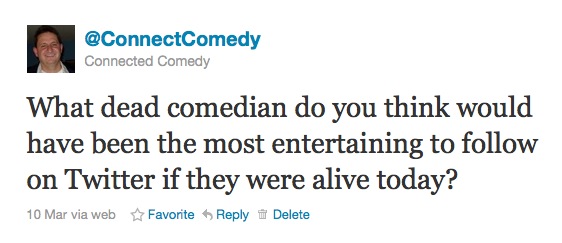
Here’s a small example of what this can look like, as demonstrated in a simple question I tweeted last week that I thought my existing followers might want to discuss:

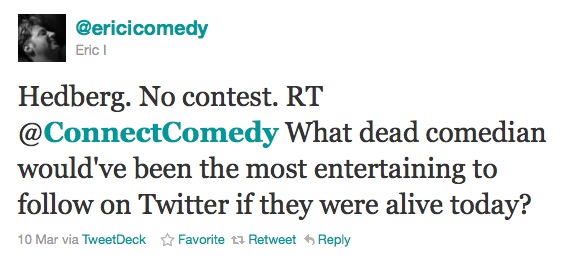
Sure enough, one of my followers responded to me:

That guy has more than 1,200 followers who now saw my Twitter name in their feeds.

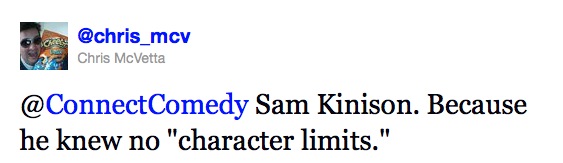
Then, four more of my followers responded to my question:

As you can see, the simple act of me asking a question on Twitter got my account exposed to a lot of new people. And I then went on to Retweet some of these responses, or reply to them to further the conversation which also further cemented my relationship with the people who had answered. This encourages them to answer again in the future, and to continue to pay attention to the things I tweet.

Plus, it’s a lot more fun than just talking at people and feeling like nobody reads what I tweet. Try it, I think you’ll agree.

If you enjoyed this post, please take a moment to subscribe to my Free Tips Newsletter.

The Story Of Blerds (and Comedy Central’s “Mash Up” Special)

This past Friday night, Comedy Central debuted a unique special called Mash Up, which featured a blend of standup, re-enactments of jokes, and other random video sketch pieces. It’s really unlike anything else I’ve seen on Comedy Central and I highly recommend you check it out when they inevitably rerun it.

I was particularly interested in Mash Up, because I played a small role in its creation and I think its mere existence can teach you a lot about how the business is changing.

Way back in 2006-ish, I was producing standup comedy tours. One of these tours was the High Times Comedy Tour, and when we decided to take the show to Chicago I went to the Internet to find a local comedian to be the opening act on the show.

I don’t remember exactly how I found them – maybe it was a Google search, maybe it was a local Chicago comedy blog, but I came across a group of Chicago comedians who were calling themselves Blerds (short for Blog-Nerds).

I found my way to the group’s website and discovered a huge collection of talent. Blerds consisted of 12 standup comedians who had teamed up with a filmmaker and launched a site where they all posted blog entries and videos that were shot by a young talented filmmaker named Jordan Vogt-Roberts. Here’s an example of one of their videos from that time:

At the time, the comedians were virtually unknown to anybody outside of Chicago comedy groupies, but now I bet you’ll recognize a lot of the guys as some of the fastest rising stars in comedy today. Kyle Kinane, TJ Miller, and Kumail Nanjiani are just a few of the group members who have gotten a ton of attention in the past couple years.

I wound up booking TJ Miller on our show, and meeting with the rest of the group while I was in Chicago. I thought they had a ton of potential and could use a little guidance, so I started working with the group as a producer and with a couple of the guys as their manager.

I helped Blerds spread the word about what they were doing – we took their videos off Quicktime and uploaded them to YouTube and MySpace (hey, it was 2007) where they were more likely to be seen and shared.

I helped them set up showcases in Los Angeles at the Hollywood Improv and UCB Theater, and invited industry people to come see what they were up to.

And I helped them craft web series pitches in the hopes of finding somebody to pay them to produce content.

Sure enough, things started happening for the guys as a group and as individuals. Suddenly, “Hollywood” knew about them. I helped them sell two different web series pilots to Warner Bros. and Comedy.com, and the UCB Theater showcase turned into a monthly show. Their videos took off online, generating millions of views, they got booked at HBO’s Vegas Comedy Festival and the guys started moving to LA and NY to capitalize on all the “heat” they received.

I’m not about to pretend that this all happened because of me – these guys are super talented and it would have happened anyway. But I’d like to think I was at least able to help them speed up that process by working with them to use online tools to grow their fanbase, get attention, and jumpstart their careers.

Eventually, Blerds disbanded and while all the guys have remained great friends and collaborators, they each went off in their own direction to pursue their individual careers. I’ve been thrilled to remain friends with them, and we still find the occasional project to work on together.

So what does any of this have to do with Mash Up? Well, Mash Up was directed by the Blerds director, stars several Blerds comedians, features the same re-enactment videos that were Blerds trademarks, and even feature some videos that were first seen in those initial UCB showcase shows.

In a lot of ways, Mash Up is a Blerds special, just with a different name.

Ok, so why should you care about this beyond humoring me as I take a fun trip down memory lane?

The mere existence of this Comedy Central special demonstrates the impact that teaming up with other comedians, embracing online marketing for your content, and working to create something different and unique can have on your career.

Plenty of comedians have bubbled on to Hollywood’s radar in the past couple years, but most didn’t get an hour Comedy Central special like this – only Blerds did. And the reason is because of the work they started doing way back in 2006, when most comedians thought the secret to Internet success was to buy a MySpace friend adder.

A couple years from now, somebody reading this is going to get a Comedy Central special. And I guarantee you it will be in small part because they’re paying attention and making an effort to take advantage of the amazing opportunities the Internet can provide a comedian.

I hope a couple years from now when your Comedy Central special debuts, I’ll get to write an article about how it all began for you when you read this post.

Here’s the guys who made up Blerds. They’re all hilarious – go check out their stuff.

Pat Brice (R.I.P.)
Mike Bridenstine
Mike Burns
Nate Craig
Sean Flannery
Mike Holmes
Kyle Kinane
Jared Logan
TJ Miller
Kumail Nanjiani
CJ Sullivan
Prescott Tolk
Jordan Vogt-Roberts

And here’s a video that Jordan made to screen at a Blerds roast, where the guys officially declared the end of Blerds.

Connected Countdown: 10 Things You Need To See This Week

Every Friday I break down the 10 things I think you most need to see this week, including a mix of posts on this site and other stuff from around the web that I think should be on your radar. Here’s this week’s countdown…

10. 5 Reasons You Should Curate As Much As You Create

One of the more popular posts I’ve written here on Connected Comedy, in this post I break down exactly why you should think of yourself and what you do online differently than you probably do at the moment.

9. Funny Or Die Launches A Sketch Contest And Gets Into The Book Business

This post from The Comic’s Comic (a site you should definitely be reading) breaks down some news from Funny or Die including the revelation that they’re now looking to develop and publish humor books.

8. 5 Free Tips For Comedian And Writer Ross “Teddy” Craig

In this Connected Comedy post, I give some advice to a Scottish comedian looking to get more work writing for TV.

7. Jonah Peretti Explains Viral Media

I’ve written about Jonah Peretti before, but this Business Insider post breaks down a recent presentation he gave that really includes some great insight into what makes content go viral.

6. Why I Launched A Connected Comedy Tumblr And What You Can Find There

In this Connected Comedy post, I explain my decision to launch a Connected Comedy Tumblr page and why you may want to consider launching one as well.

5. Gil Ozeri’s Two And A Half Men Marathon

Comedian Gil Ozeri pulls off an amusing stunt by forcing himself to sit through a marathon of Two and a Half Men episodes and detailing the results.

4. Why You Should Use A Facebook Fan Page Instead Of A Group

In this Connected Comedy post, I explain the reasons every comedian should have a Fan Page on Facebook.

3. CBS News Goes Behind The Scenes At Funny Or Die

It’s somewhat of a puff piece, but Katie Couric sits down with the crew at Funny or Die to discuss how the site and company works.

2. Not All Fans Are Created Equal – The 4 Types Of Fans

In this Connected Comedy post, I break down the four types of fans you may have and explain how you can convert fans into more valuable types of fans.

1. How To Go Viral

This post from the Music Tank blog is theoretically for musicians, but it’s just as applicable for comedians. Especially notable is the list of adjectives mentioned and the suggestion that if you’re video matches three of them, it will usually work.

Thanks for another week of reading Connected Comedy. If you like what you see, please take a moment to go subscribe and join our community.

Why You Should Use A Facebook Fan Page Instead Of A Group

As great a tool as Facebook is, one thing that Mark Zuckerberg and company don’t do well is explain to users which of their services best suit their needs. For comedians, this leads to a lot of confusion about whether you should have a Facebook Fan Page, a Facebook Group, or just use your personal Facebook profile page to promote your projects. I believe there’s a clear answer to this confusion and it’s that you should be using a Fan Page – here’s a couple reasons why…

Facebook Fan Pages Allow For Unlimited Fans

I know lots of comedians who use their personal profile pages as their primary Facebook presence and that’s usually fine..until they discover that you’re only allowed to have a maximum of 5,000 “friends” on your personal profile. And Facebook Groups are only allowed to have 1,000 members. This may not seem like a problem if you’re just starting out, but it ultimately will become a big problem and is the number one reason why you need to create a Fan Page in addition to your personal profile.

When you eventually hit the 5,000 friend limit on your personal profile, you’ll have no choice but to start another page and then you’ll have multiple pages to update and a lot of confusion. You’re much better off driving people to connect with you on your Fan Page from the start.

You Can Run Ads Targeted To Fans Of Your Page

I’ve written before about how helpful Facebook ads can be, but one of the things that I haven’t yet mentioned (though it’s coming in a future post) is the value of running ads targeted only to fans of your Facebook Fan Page. For example, if you’ve got a new album out you may want to run an ad targeted to your existing fans. Or if you’re playing a live show in a particular city, you may want to run an ad targeted to your fans in that city.

In order to do these things, you have to have a Fan Page – you can’t target Facebook ads based on your personal profile page or Facebook Groups. Again, you may not think that running ads targeted to your fans if something you’ll ever do, but you never know and you’ll probably want to have that option at some point.

Your Status Updates Go To (Almost) Everybody’s Feeds

If you’re using a Facebook Group, you don’t have the ability to post status updates that appear in your fans’ news feeds. While I’ve written before that status updates on Facebook Fan Pages are far from perfect, it’s nonetheless helpful to be able to reach a lot of people with one quick update as opposed to a group page where you have to individually message people and/or hope they just happen to return to your Group page.

Need some help setting up an effective Facebook Fan Page or getting more fans? Email me to find out how else I can help you.