

Josh Spector

How To Create Your Own Tosh.O Show And More Stuff I’m Thinking About This Week

Here’s this week’s semi-rambling look at things I’ve been thinking about, stuff comics should know about, and more food for thought for comedians.

How To Easily Create Your Own Tosh.O Style Show

I happened to check out this Laughspin video playlist the other day and it made me realize that it would actually be pretty simple for comedians to create their own Tosh.0 style series on YouTube where they would highlight and joke about various videos on YouTube, without really needing to have any major editing skills.

Basically, you could shoot wraparound segments where you introduce and joke about whatever clips you want to include and then combine them in a playlist along with the actual clips.

YouTube playlists are really easy to set up, are embeddable, and one video flows right into the next one so it would probably work pretty seamlessly.

The Laughspin playlist which you can see below is a decent example, although the only original content they include is just an intro as opposed to wraparounds between each video.

Would You Have The Guts To Do What Jay Hollingsworth Is Doing?

Seattle-based comedian Jay Hollingsworth recently launched JokeAWeek.com and I highly recommend you check it out.

Basically, Jay’s chronicling the process as he develops a new hour of material – sharing footage of himself trying out and developing a new bit each week through a series of videos. Besides being interesting, I have a hunch that many other comedians will find it really helpful to see how he works at his material and how it evolves.

Here’s Jay’s explanation of what he’s doing:

And here’s a look at Jay’s first Joke of the Week.

Ari Shaffir’s Tips For New Comedians

Speaking of comedians sharing their expertise, I recently came across a fantastic audio recording of comedian Ari Shaffir answering questions and giving advice to younger comedians at the Comedy Store.

I don’t know all the backstory on this, but I believe Ari just did it because it was the kind of thing he wished a veteran comic had done for him back in the day, but whatever the reason it’s a great source of info for comics who have questions about how the business actually works and want honest answers from somebody who’s living it.

You Should Pay Attention To What Lee Camp’s Doing

Lee Camp is a comedian out of New York who has been hustling his ass off the past couple years and building a strong following thanks in part to a video series he created called Moment of Clarity.

After doing about 220 episodes of the show, Lee has recently expanded to a much more elaborately produced show and recently launched a Kickstarter to fund more episodes at this level.

He’s already raised more than $14,000 from 300+ backers and is halfway to meeting his goal.

Here’s what he’s doing, why, and how he’s successfully pitching it to supporters. There’s a lot you can learn from what Lee’s done over the past couple years.

The Economics Of Producing Comedy Shows

Here’s a great piece in Chicago Grid that features several different producers of different kinds of comedy shows in Chicago revealing exactly how they make money (or in some cases, don’t make money) when it comes to putting on comedy shows.

The Comic Behind @DadBoner

Mike Burns is a comedian in Los Angeles who secretly started the popular @DadBoner Twitter account a couple years ago. Vice recently produced a short documentary about him, comedy, and the rise of that Twitter account and it’s a pretty interesting watch. Also, a great example of what can happen if you actually put some time into trying something…even if you initially do so anonymously.

More Stuff I’ve Been Thinking About

If you enjoyed this post, check out some of what else I’ve been thinking about in recent weeks.
Read This Before You Decide To Sell Your Comedy Album

One of the most common questions I get from comedians is some version of “How do I sell my comedy album?”

My answer is usually to reply with another question for you – are you sure that it’s in your best interest to sell your album as opposed to giving it away for free in exchange for an email address or some other form of connection to a potential fan?

While there’s nothing inherently wrong with trying to sell your album and make some money from it, the reason I ask this question is because there are several shifts in the comedy business in recent years that have made selling albums increasingly difficult and at the same time there’s a growing importance in building your email list and connection to fans.

In most cases, especially if you’re a comic who doesn’t have a large pre-existing fanbase, you’ll be better served in the long run by giving away the album for free than you will by selling it. Here’s a few things worth thinking about before you decide what’s the best path for you.

Your Album Is Competing Against The Greatest Standup Performances Of All Time – Which Are FREE

Thanks to YouTube and assorted file-sharing networks and streaming services, pretty much every comedy performance ever recorded (on audio or video) is now available to anybody who wants to listen to it with the click of a button…and for free. This means your album is competing for attention against everybody from George Carlin, to Chris Rock, to Louis CK. That’s a tough enough battle to win without even putting up the barrier of asking people to pay to hear what you have to say, let alone when you’re asking people to pay for the privilege of listening to you instead of some of the greatest comics to ever do it.

[Please note that I’m not defending piracy of other people’s content, but rather just pointing out the reality that pretty much everything is out there and available for free if people want to find it.]

Your Album Is Competing Against Thousands Of Comedy Podcasts Which Are FREE

As if it’s not enough that just about every comedy album is available online for free, there’s also the issue of the comedy podcast boom which is providing another huge batch of competition for fans’ attention. If somebody has an hour free and wants to listen to a comic make them laugh, they can choose to buy your album or listen to pretty much any other comedian in the world’s podcast which is likely available for free (with few exceptions).

There’s A Generation Of Fans That Are Used To Getting Content For FREE

You can debate whether or not it’s a good thing, but the fact remains that an entire generation of media consumers has come of age in a world in which virtually all content they consume is available for free. Simply put, they haven’t been conditioned to pay for albums and therefore in order to get them to pay for yours you’re betting that you can overcome a much broader cultural norm that goes way beyond the quality of your material. That doesn’t mean it’s impossible to get people to buy your album, but it certainly makes for a more uphill battle.

If The Music Industry Has Failed At Selling Albums, Do You Really Think You Will Succeed?

There’s obviously a difference between the comedy and music industries, but just take a look at what’s happened to music over the past few years. Despite all the resources and power of the record labels, album sales have fallen off the cliff and are essentially a dead art form at this point. For the most part, musicians have given up on chasing album sales (because they’ve had to) and have started to realize they have to find other ways to make money such as through their live performances. That’s also why you see so many up and coming musicians giving away their music at this point in order to build a fanbase because they realize that’s more important than selling a couple albums.

It’s Cheaper Than Ever To Record An Album

On the positive side, technology has made it cheaper than ever to actually record an album which is great and provides another reason why it’s ok to release your album for free. Because you should be able to record and distribute an album for a lot less money than it used to take, it shouldn’t be as necessary to sell your album in order to recoup your initial investment.

You Don’t Have To Sell Your Album To Monetize Your Fans

Just because you decide to give away your album for free, that doesn’t mean that you can’t still make money from it. You can encourage fans to make a donation if they enjoyed the album, or you can offer some bonus tracks they can buy if they enjoyed the album, or you can hopefully eventually sell them tickets to come see you live (assuming you’ve captured their email or a connection to them in exchange for the free album).

Ultimately there’s nothing wrong with trying to sell your album, but obviously I personally believe that in most cases you’d be better served by giving it away. If you need a little more convincing, here’s a post I wrote last year about 5 Reasons Why You Should Give Away Your Comedy Album Instead Of Selling It that you might find interesting.

Comics Have Too Many One-Night Stands And More Stuff I’m Thinking About This Week

Here’s this week’s semi-rambling look at things I’ve been thinking about, stuff comics should know about, and more food for thought for comedians.

Comedians Have Too Many One-Night Stands

As much as I’d love to talk about the sordid details of comedians’ sex lives here, that’s not actually what I’m referencing in the headline above. Rather, lately I’ve been thinking about the idea that comics have too many one-night stands with the audiences that see them perform.

Way too many comics are having way too many one-night stands with their audience – they do their set, the crowd enjoys it (hopefully), and there’s never another interaction between them after that. It’s one and done…and it’s meaningless.

One-night stands might be great when it comes to getting laid, but from a career standpoint? Not so much.

Louis CK on Howard Stern

Louis CK paid another visit to Howard Stern last week and it’s another interview well worth listening to. He talks about a variety of stuff ranging from his comedy, to his career decisions, to the reasons he’s taking a break from his hit TV show when it’s at its peak.

You can watch/listen to the first part of the interview below, and click through to hear the rest at the end of the video.

Bert Kreischer’s Advice For Newer Comedians

Bert Kreischer recently had Chris Gore on an episode of his Bertcast podcast and about halfway through the interview (around the 30-minute mark) it turned into Bert offering some comedy career tips to Chris. Bert’s got a lot of great advice to share and I highly recommend checking it out below – especially if you’re a newer comedian trying to figure out how to get out on the road, how to develop an hour-long set, and other things you need to learn to take your act to the next level.

WeWantShows.com

I recently came across this site which is designed to help indie bands connect with each other to trade show opportunities. It looks like a pretty new site and not sure if they’d allow comedian participation or not, but it’s an interesting concept and the kind of thing that likely could help a lot of comedians if a comedy version of it existed.

Casting Directors On Twitter

If you’re interested in landing acting gigs and don’t yet have an agent to send you out on auditions, one of the things you might want to do is start trying to follow and connect with various casting directors and casting agencies on Twitter. I’m not suggesting you start spamming them looking for work, but it’s probably worth following some of them and trying to start developing a genuine relationship with them.

Toward that end, I recently came across this list of Twitter lists featuring casting directors/agencies that might be a good place to start finding some.

Most Comics Seem More Interested In Getting Booked Than Getting Better

I get all kinds of questions from Connected Comedy readers about a wide variety of topics, but one of the things I’ve realized recently that I think is interesting is that by far the most common question I get asked is some variation of “How do I get booked?”

There’s nothing inherently wrong with that question and it’s certainly an important part of the business, but I think it’s telling that way more comics ask me that than ask, “How do I get better?” or “How do I get more fans?”

The bottom line is most comedians are still focused on the issue of getting a booker – or some other industry gatekeeper – to give them permission to have a career as opposed to focusing their efforts on figuring out how to build one for themselves. It also reflects an assumption by many comics that they are good enough to deserve to get more bookings and/or that there’s some kind of “trick” to getting booked.

I mentioned this on Facebook and it’s spurring some interesting discussion which you can check out here.

Gonzo Fame

There’s a new site called Gonzo Fame that’s featuring interviews with comedians such as Doug Stanhope and Ralphie May sharing their thoughts about comedy. There’s not a lot up there yet, but it looks promising and might be worth checking out.

More Stuff I Was Thinking About

If you enjoyed this post, check out some of what else I’ve been thinking about in recent weeks.

Connected Comedy Podcast Episode 33: If Someone In Hollywood Said It, It Has To Be True

Please subscribe and rate this podcast on iTunes!

On the “pay what you want” episode of the podcast, Josh Spector, Jordan Cooper, Chelcie Rice and Josh Homer discuss the backlash towards the recent Connected Comedy post posing a concept where the audience decides a comedian’s pay, whether or not this would be good for comics, question if a crowd can even judge good comedy in the first place, and if the negativity highlights how much comics actually hate club audiences.

In addition, we continue on the topic on a broader level and into the psyche of stand-up comics. Are we relying too heavily on the security of the live comedy infrastructure? What do we do when the club “circuit” goes away? Does the industry truly want us or really just want our audience?

[powerpress]

Links from this episode:

The Most Annoying Thing Comics Do And More Stuff I’m Thinking About This Week [Connected Comedy]

Chirpify – The Social Commerce & Payments Platform

You Know What Comics Really Hate? The Audience. [Connected Comedy]

6 Lessons You Can Learn From The Success Of “Jackass” [Connected Comedy]

The New Movie Stars: How Jennifer Lawrence, Jessica Chastain and Ryan Gosling Are Redefining Stardom [The Wrap]

Comedy Living Room: It’s Comedy…in a Living Room [LA Weekly]

Participate with the community in our Connected Comedy Facebook group or post your questions, suggestions or topics to cover in the future on our Facebook page. We always welcome your comments!

5 Ways To Build A Closer Connection To Your Fans

Do you spend more time trying to attract new fans or improving your connection with existing ones?

If you’re like most comedians, you probably spend so much time chasing new fans that you may overlook the importance of stengthening the bond you have with your existing fans. That can be a big mistake because the more your existing fans care about you and feel invested in what you do, the easier it will actually be to attract new fans because you’ll have a base on which to grow and that can help spread the word about you.

One of the best ways to improve your connection to your fans is to have one-on-one interactions with them – the more they feel like they personally know you, the more they’ll care about you as opposed to just being another person who may be following you on social media but who may not think you even notice.

There are infinite ways you can improve your connection to your fans, but here’s a few specific things you might want to try that are easy ways to facilitate individual interactions, and in turn a closer relationship to your fans.

1. Message New Facebook Fans

When somebody “Likes” your Facebook page, it gives you an opportunity to have an easy one-on-one interaction with them. I’d recommend messaging them through Facebook (not posting on their walls, but privately messaging them) and just saying thanks. You can ask how they heard about you, encourage them to contact you at any time, or just generally introduce yourself and say thanks.

Don’t spam them with promotional stuff about your next show or newest video, but rather just show them you appreciate their interest in what you do. It’s an easy way to show that you care and it sets the table for a better relationship as you move forward. In the early days of my Connected Comedy Facebook page I did this all the time and it was really effective at helping build a true community of fans.

2. Greet New Email Subscribers With A Conversation Starter

Just like a new Facebook fan creates an opportunity for interaction, so too does a new email subscriber. Besides sending an email thanking people for joining your email list once they do, you can also incorporate something into that email that’s designed to get a response.

Again, this shouldn’t be a promotional plug but rather some kind of question or something that will give the subscriber a reason to reply to your email and engage in a conversation with you. For example, I recently added a line to my initial email to new subscribers that says, “What are you struggling with the most right now in your comedy career? Reply to this email to let me know and I’ll be happy to help.”

This gets a lot of responses and instantly gets me into a conversation with new subscribers – I learn about them and they learn about me, and we get a little stronger connection to each other.

3. Comment and Interact On Your Fans’ Creations

Your fans may not be comedians, but these days everybody is a creator. Your fans are all probably sharing comments, links, photos, and other stuff through their Facebook or Twitter accounts or other social media outlets. When was the last time you Liked, shared, or commented on those creations?

This is a really easy way to start developing a better relationship with fans because (just like you do with your stuff), they will love the attention and will appreciate that you care enough to engage with what they’re doing. The more your fans feel like their relationship is a two-way relationship instead of just a one-way relationship, the more they’ll support you.

4. Take Advantage Of People You Meet At Your Shows

One of the best opportunities to further connect with fans is when you get to meet them in person after a show. If somebody comes up to you after a show to say they liked you, the obvious thing to do is to thank them and have a nice chat with them. Some comics will also go  the extra step to get them to join their email list or some other form of connection. But that’s typically where it stops, which is a shame because there’s more opportunity there to be had.

You can look at those interactions as launchpads to start conversations that continue beyond when you say goodbye for the night. For example, you could have a particular piece of content or page on your website that you only send to people who come talk to you at shows that you promise to send them. Or, you could offer a free copy of your album only to people who talk to you at shows and give them the download link. Again, there’s infinite things you can try, but the idea is to think about how you can take that one moment and expand it into something bigger and ongoing.

5. Reward Fans Whenever You Can

No matter what you’re doing, you should always be looking for ways to give your fans a little special treatment. Maybe that means they can skip the line at your show, maybe it means they get to be mentioned in your videos, maybe that means they get early access to new content or merch, maybe it means you reference their name in a joke, maybe it means you buy them a drink or randomly send a fan a gift each week.

The point is that you want to find ways to showcase and reward the people that are your true fans versus the people who might be just casually interested in you. This will serve a couple purposes – it will make your true fans feel appreciated and more connected to you, and it will also make the more casual fans want to become bigger fans because they’ll want to get that special treatment as well.

It’s Your Turn…

I’d love to hear some of the things you’ve done to strengthen your connection to fans – please post them in the comments…

A Comedian’s Free Tumblr Comedy Class And More Stuff I’m Thinking About This Week

Here’s this week’s semi-rambling look at things I’ve been thinking about, stuff comics should know about, and more food for thought for comedians.

Comedian John Roy’s Entirely Free Comedy Class – On Tumblr

For the past several weeks comedian John Roy has been rolling out what he’s dubbed his “Entirely Free Comedy Class” on his blog. I highly recommend you check it out – he’s posted six lengthy posts worth of the class so far, and you can start with the first one here.

Here’s his explanation of why he’s doing it:

“Lots of people in every major city are charging money to take a standup comedy class. While I know comedians who have benefited from such classes, the majority consensus among fellow comedians are that these are of dubious value and, even if they help with some fundamentals or with building courage and comfort on stage, neither replace the time you will have to spend in open mics nor are worth the hundreds of dollars they normally cost.

The fact remains that there is no homework in standup comedy. You may practice your jokes at home until they are very polished, but you will not know how funny they are or the proper way to time your delivery of these jokes until they encounter a live audience and you see how people who expect to laugh react to them. So, I am now teaching a comedy class. On tumblr. For free.”

How To Get Sponsors For Your Podcast

Way back in December 2011, the Earwolf podcast network posted an episode in which they interviewed David Kahn, who at the time was helping monetize and attract advertisers to Kevin Smith’s Smodcast podcast network.

In the episode, Kahn talks about how he approaches advertisers, how he sees the podcast world evolving, and the general opportunities and challenges facing podcasters from a business perspective.

Even though it’s more than a year old, it’s still very relevant and worth a listen if you have any interest in monetizing your podcast – or for that matter, any content you create online.

Meet The New TV – It’s Like The Old TV, Only Totally Different

I don’t want to say I told you so, but remember that post I wrote a couple weeks ago about why every comedian should pay attention to the new Twitter TV ratings? Well, Wired recently published a much deeper dive on the subject and breaks down the rise of “social TV” (an admittedly obnoxious term) and explains why “The Nielsen Family Is Dead.”

It’s worth a read if you have any interest in TV or ever being featured on one. And if you’re a comedian, I’m sure you have that interest.

Media Hacks

Several years ago I saw Mitch Joel speak at the Montreal Comedy Festival and he gave a great talk that in some ways inspired what Connected Comedy would ultimately become. Mitch has an excellent marketing podcast called Six Pixels of Separation which I highly recommend, and a recent episode might be a good one for you to check out since it actually touched on comedy a little bit.

In his Media Hacks episode, Mitch is joined by several other leading marketing/social media experts for a great discussion including a bit of talk about Funny or Die, its initial struggles and recent success.

Video Podcast Network

Have you checked out the Video Podcast Network on YouTube yet? It features video versions (some animated, some not) of several popular comedy podcasts including the Adam Carolla show and the Earwolf network. It’s also an example of the development of something I wrote about way back in 2011 when I shared the 5 Reasons Your Podcast Should Include Video.

On a side note – yes, I know the irony that I wrote that piece and yet I don’t include video as part of our Connected Comedy podcast but stay tuned…that may be coming soon.

Would You Want To Read Comics’ Reviews Of Other Comics?

There’s a new online publication called The Talkhouse that features reviews of new music albums, written by other musicians. It’s a pretty interesting site that got me wondering how much of a disaster a site would be featuring comedians reviewing each other’s albums?

Get Your Marketing Nerd On With Marketing Experiments

My newest obsession (because I’m a marketing geek) is the Marketing Experiments blog, and in particular the series of videos the site produces where they review and reveal the results of various tests they run to determine things like what email subject lines work best, how best to get people to subscribe to things or purchase things, and assorted other geeky marketing conversion topics.

This is certainly not going to be for everybody, but that doesn’t mean it’s not helpful. For an example, check out this video in which they discuss the 5 easiest changes to make to your web pages to increase conversions:

“If You Get Offended By It, It’s Not For You”

I came across a Kickstarter recently that I thought many of you might want to support – it’s for a documentary called That’s Not Funny that will be “An exploration of controversial topics in comedy and an examination of recent incidents involving comedians who have crossed the line.”

You can watch the trailer below, or go here to donate to the Kickstarter to help make it happen.

Want More Stuff Like This?

If you’ve enjoyed this post, you might want to also check out The Most Annoying Thing Comics Do And More Stuff That Was On My Mind Last Week.

And Now, One More Question For You…

I’ve had a lot of people reach out to me and say they’d like to hear more success stories from comics who have tried different things in the marketing/business side of their career. So, if you’ve got anything you’ve done that you found successful and you’d like to share it with me and my readers, please shoot me an email and let me know. Thanks!

You Know What Comics Really Hate? The Audience.

The other day I threw out a hypothetical scenario and asked what comedians thought would happen if they got paid based on some kind of audience voting mechanism at shows. I was really just kind of thinking aloud and then posted a similar question on the Connected Comedy Facebook page.

The reaction I got shocked me.

The vast majority of comedians who responded acted like it was an insane suggestion and fired off a barrage of comments about what a terrible idea it was and how comics deserve to be paid no matter what the audience thinks of them. They even compared a comic’s act to a plate of bad food that a restaurant might serve – you should be paid regardless of whether the customer enjoyed it or not.

And it didn’t stop there.

Lots of commenters went on to talk about how allowing the audience to determine payment for comedians would result in terrible comedy, hack jokes, and audiences packed with friends of comics who would unfavorably sway the vote to make their buddy more money.

Honestly, it was really eye-opening on a lot of levels to see where so many comics (admittedly, many of them just starting out) are coming from. It also brought to light something else…

Lots of comedians hate comedy audiences.

Those comics are going to fail, and here’s why…

[NOTE: This isn’t about the specific idea of the audience determining pay any more, but rather the underlying attitude of the reactions that idea generated.]

You Don’t Need To Please Every Audience, You Need To Find YOUR Audience

A lot of the reactions I got were coming from comics who seem to assume that the hypothetical audience they would perform for wouldn’t “get” them and therefore wouldn’t choose to pay them their fair share of the money. Setting aside the weird mix of ego and insecurity that this reveals, what’s really interesting is that it also reveals that most comics assume they’ll perform for people that aren’t their target audience.

If you have a particular style of comedy or niche audience you believe will enjoy you, then you should concentrate on seeking out opportunities to perform for those people. You’re never going to please everybody so don’t even bother trying – focus on who is most likely to enjoy you. That’s who will ultimately determine your success or failure.

Nobody Owes You Anything

There’s clearly an assumption that venues, promoters, or bookers owe you something and that you have some inherent right to get paid for standing on somebody else’s stage and telling jokes to somebody else’s crowd on somebody else’s dime. That’s just not true.

If somebody promises you payment, they should pay you, but I don’t believe that anybody has to promise to pay you any more than the value you provide. And the reality is that the value you provide is directly connected to the number of people that come to see you, the experience they have while seeing you, and the likelihood they’ll come back to see you (or the venue) again.

That, plus how easy or difficult you would be to replace with somebody else, is what determines what you’re entitled to in terms of payment. So really, whether you like it or not, it’s ultimately the audience determining your payment even if you may not realize it. Speaking of which…

The Industry Doesn’t Want You, They Want Your Audience

You might think bookers are booking you for your talent, but they’re really more interested in your audience. You’re just a middle man to help them put people in the seats and/or keep them there. You might not realize this when you’re starting out on the open mic circuit, but you certainly will learn it as you move up the ladder.

There’s tons of feature acts who may be “better” than some headliner who happens to play the wacky neighbor on a TV series and do standup as a hobby/cash grab, but the TV guy will get the bookings and the bucks because he/she attracts an audience to their shows. They sell tickets and that’s ultimately what it’s about.

Most comics spend so much time trying to get the industry to notice/like them that they don’t even realize the industry is actually looking for is people with an audience.

Yes, you have to be good to build an audience. But it’s not enough to just be good – you have to understand that the power lies with the audience you can summon as much as it does your act.

We’re Living In A World Where The Audience Controls Everything

This shift of power to the audience is something that extends way beyond just the world of comedy. Look around you – music, business, media, technology, they’re all increasingly driven (and monetized) by audience reaction as opposed to the pre-Internet world where a select few gatekeepers determined who got paid and for what.

The #1 song on Billboard right now is “The Harlem Shake” because the audience put it there, not radio. The Veronica Mars movie is happening (in part) because the show’s fans are funding/clamoring for it.

In a world where the audience dictates success or failure to such a large degree it’s foolish to think comedy should/will operate differently. Do you think Comedy Central is more or less powerful than it was 10 years ago? Just something to think about…

Have Some Balls

Perhaps the most discouraging thing about the reactions I got to my original question was that so few comics actually assumed they would succeed in an audience-driven model.

It was amazing – especially considering so many comics talk about how they kill each weekend – that so few of them believed an audience vote would actually make them more money than they currently earn at a show.

In short, they assumed they’d be losers. That the audience wouldn’t like them enough to pay them. That’s kind of sad, don’t you think?

As I talk about all the time on this site, I believe it’s important to be willing to experiment, to believe you can succeed, and to put the audience first.

Sure, this was only a hypothetical scenario, but unfortunately it seems like there’s not a whole lot of comedians that share those beliefs.

Connected Comedy Podcast Episode 32: Laugh Ears

Please subscribe and rate this podcast on iTunes!

On the “obsessive compulsive” episode of the podcast, Josh Spector, Jordan Cooper, Chelcie Rice and Josh Homer discuss figuring out how many people are truly your fans, pivoting your strategy based on data, developing a fanbase in industry towns versus on the road, why the drawing power of TV-credited comics is vastly overestimated, and what comedy managers can learn from music labels and concert promoters.

In addition, we poke fun at delusional comedians who post on Facebook about “killing” (when they really didn’t), the difference in treating comedy as a hobby versus a career, and how no matter what you do, it should always have a definable purpose.

[powerpress]

Links from this episode:

Between Two Ferns w/ Zach Galifianakis

CC Podcast Episode 31: You Have To Care

1000 True Fans [Kevin Kelly]

10 Things Comics Need To Ignore [Connected Comedy]

Find The Thing You’re Most Passionate About, Then Do It On Nights And Weekends For The Rest Of Your Life [The Onion]

The B.S. Report w/ Bill Simmons

FiveThirtyEight Blog – Nate Silver

I Killed Last Night, Now What? [Reddit]

10 Things You Can Do To Jumpstart Your Career [Connected Comedy]

Participate with the community in our Connected Comedy Facebook group or post your questions, suggestions or topics to cover in the future on our Facebook page. We always welcome your comments!

The Most Annoying Thing Comics Do And More Stuff I’m Thinking About This Week

In the spirit of experimentation, I thought I’d try a new type of post out today. Here’s a somewhat rambling look at several things I’ve been thinking about and that have caught my eye recently that I thought might be worth mentioning.

The Worst Possible Thing To Do With Your Mailing List

I deal with lots of comedians who I don’t personally know through Connected Comedy, and I’m amazed how many of them just add my email address to their mailing list and send me email blasts that I never signed up for and that are completely irrelevant to me (i.e., I’m probably not going to fly from LA to Cleveland to check out your next Open Mic).

Here’s a hint – Don’t ever do that!

Not only is it technically illegal due to spam laws, but it’s also just plain stupid. If people haven’t subscribed to your email list, it’s because they’re not interested in what you have to say. To think that suddenly spamming them with an email is going to win them over and convert them into a fan of yours is insane – it will actually do the opposite.

The quickest way to make people hate you – and ensure they’ll never join your email list – is to add them without their permission. I’m sure there’s a zero percent success rate of getting those people to come to your show or buy your product, so all you’re doing is turning potential fans into enemies.

You Never Know Where It’s Going To Come From

60 Minutes did an interesting feature on Twitter founder Jack Dorsey last week and I highly recommend you watch it below.

It doesn’t really have anything to do with comedy, but it’s interesting to see how Dorsey thinks and specifically that the original idea for Twitter evolved from his fascination with trains and the way police communicated with each other in short bursts.

The point is that even if your interests or expertise isn’t comedy related, there may be ways you can take what you’ve learned and adapt it to your comedy career. Just something to think about…

Birthday Posts On Facebook

It was my birthday recently and just like everybody else on Facebook, I got the usual batch of birthday wishes from friends posted on my Timeline.

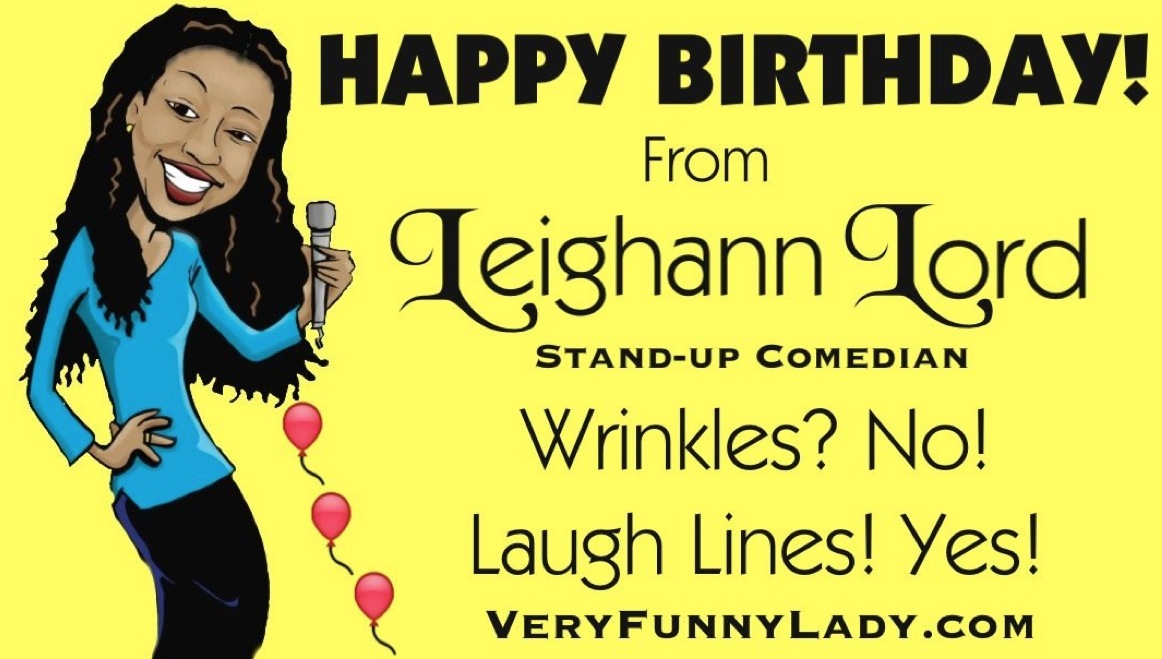
But one thing I happened to notice was this image from comedian Leighann Lord which happens to have some built in promotion for herself and her website.

I’m not sure I exactly love this execution – feels a little too promotional and not personal enough – but I do think it’s an interesting concept and potentially clever way to take advantage of an everyday occurrence to get more exposure for who you are and what you do.

Keep An Eye On Medium

Have you checked out Medium yet? It’s a pretty interesting new blogging platform/social network from the guys who originally brought you Blogger and Twitter (which bodes well for its chances of success).

It’s basically a site where you can write blog posts and then have them grouped along with posts from other people about a specific topic. It’s currently by invite-only, but it seems to be developing nicely and is definitely worth keeping an eye on.

Another Reminder That There Are No Rules

Have you heard about that Steve Jobs movie that’s coming out starring Ashton Kutcher? Well, so did Funny or Die and they decided to make their own full-length Steve Jobs parody movie and release it online before the Kutcher movie hits theaters.

The announcement got a ton of press and is a really clever marketing stunt – whether their movie winds up being any good or not.

This is a good example of how you can piggy back on big entertainment events to attract some attention for your own projects. You may not have the resources to make a full movie like Funny or Die did here, but there’s other stuff you probably could have done. Like put out a Making of the Jobs movie parody web series? Or a fictional Jobs movie production meeting blog?

Opportunities are everywhere if you start to think differently – no pun intended.

An Interesting Twist On A Crowdfunding Project

I recently saw that Katie Goodman (who you may remember from a great appearance on our podcast where we talked about women in comedy) has launched a campaign to raise money from fans to help pay for a show she’s putting on in the Edinburgh Fringe Festival. You can see her campaign on Indiegogo to raise the money here, but what I really found interesting was an email she had sent out to fans before launching the campaign.

That email, which you can view here, was actually soliciting her fans to donate goods or services which she could then put up as prizes for people who donated money – as opposed to the usual straight ask for money. I thought it was a really interesting way to get fans involved beyond just giving money, and also allows her to provide some pretty interesting prizes that aren’t just of the usual tickets/merch variety.

What If Comics’ Worked For Tips?

Speaking of monetization, I saw a bunch of buzz this week about Chirpify, which describes itself as a “social commerce and payments platform.” That’s basically a fancy way of saying that they’ve created a way for people to pay you (or donate money to you) simply by posting a tweet or Facebook update.

It remains to be seen if it will catch on and I haven’t tried it yet myself, but it looks like it could be interesting and certainly something that could be helpful to comics – if it catches on among users. And if it did, think about this idea – could crowd members at a show directly “tip” a comic for their performance by tweeting from their phones in their seats? And if so, would that provide comics with another way to monetize their gigs directly from people who are in the crowd and based on the quality of their performance?

Taken one step further, what if when you bought tickets to a comedy show the comics’ share of the ticket prices were put into a pool and the audience got to decide what percentage of their money went to each comic on the lineup based on their performances? That seems more fun for the audience, better for the comics (the good ones at least), and like a pretty interesting hook for a show.

And Now, A Question For You…

I’ve been thinking a lot about how I run Connected Comedy lately and how I can best serve what’s become a pretty large audience of comedians who care about their career and growing their fanbase.

I’d be curious to hear from you guys – what would you like to see more of in the Connected Comedy universe and how do you think I could provide more value to you?

I’d love to hear your thoughts in the comments or feel free to email me if you’d prefer. Thanks!

If you found this post helpful, I hope you’ll consider supporting Connected Comedy.

10 Things You Can Do To Jumpstart Your Career

Do you feel stuck in your comedy career?

No matter what level you’re at, it’s likely you’re going to encounter those moments in your career where you feel like things have gone stagnant and you don’t know what to do to get to the next level and start getting some momentum going again.

Here’s a few suggestions for things you may want to try to get yourself back on track…

1. Create New Content

I’ve written before about the power of momentum and creating new fresh content is one of the best things you can do start building some momentum again for your career. Don’t worry about the results of that content, and don’t get discouraged if people aren’t viewing/reading it. Just keep creating it. Whether it’s a blog, podcast, video series, or new jokes for your standup act, focus on creating more stuff and you’ll likely find that it leads you to some new progress in your career.

2. Try Something Different

If you feel creatively stalled one of the best things you can do is explore a new comedy path – whether it’s acting, writing, sketch, improv, whatever. Step out of your comfort zone, learn a new skill, and explore things you haven’t tried before. Often times, it will lead to new opportunities for you in your career.

3. Work Harder

If things aren’t going well for you, it might be time to ask yourself if you’re really working as hard as you can be at your comedy career. If you’re honest with yourself, the chances are that you probably could work a little harder. And the chances are that if you do, you may start to see better results. Need a little inspiration to work harder? Then watch this video:

4. Network With More Established Comics

One of the best ways to generate new opportunities for yourself is to develop better relationships with comics who are more established than you and can serve as mentors or resources for you. Other comics can help with everything from advice about your act, to booking gigs, to making introductions to agents, managers or bookers. The time you spend developing strong relationships with comics who have advanced beyond where you are can really be time well spent.

5. Network With Less Established Comics

It may seem less obvious, but it’s just as important to connect with comics who are less established than yourself. You never know who is going to know who and who is headed to what level of success – comics that may seem behind you today might be able to help you tomorrow…and they’ll remember how nice (or awful) you were to them back in the day. You’ll also probably find that comics that are less established than you are will be eager to work with you on projects that may require collaboration.

6. Educate Yourself

The more you learn about the art and business of comedy, the more likely you are to identify opportunities that can take you to the next level of your career. If you’re “stuck” at the moment, take advantage of that time to learn as much as you can however you can.

7. Broaden Your View Of A Comedy Career

There’s a lot more to comedy than just stand up. If you’re banging your head against the wall trying to build a stand up career, it’s probably time to explore all the other options available to people interested in a comedy career. If you start to look for opportunities beyond 5 minutes of stage time, you might find there’s a lot of other ways to use your comedic skills to establish a career than you realize.

8. Get A Comedy-Related Job

One of the best ways to generate new opportunities for yourself is to put yourself as close to the business as possible. Get a job at a comedy club, or writing for a comedy website, or interning at a booking agency, or go work for a social media agency, or anything that you can find that’s related to the comedy business. You’ll learn more about how the business works and make important contacts that can help you jumpstart your career.

9. Focus On Why You Wanted A Comedy Career In The First Place

Do you remember why you first decided to pursue a career in comedy? It’s real easy to get distracted and forget the initial things about comedy that you loved. Try to think back to those and focus your efforts on that.

10. Spend Time On Things You Can Control

Most comics spend too much time focused on things they can’t control – getting people to book them, pay them, or hire them to produce work. That’s a recipe for getting stuck because so much of that is out of your control.

To jumpstart your career, instead focus on a project that you can completely control without anybody else’s permission, money, or input. It won’t be easy, but putting your effort into something in which your success depends entirely on your own effort can be a really powerful experience.